

BRH Publications

Bristol Radical Pamphleteer

All of these pamphlets can be bought from Hydra Books, 34 Old Market Bristol, BS2 0EZ

They are also available from Bloom & Curll, 74 Colston Street at the top of Christmas Steps.

If you want to display fine art. Discuss politics, poetry, Kafka or have a cup of tea. Play chess and plan the next revolution. We are available as a free space for discussion groups, clubs, workshops, rehearsals or as a place to simply sit, read and think. bloomandcurll@hotmail.com.

Bloom & Curll also stock No Quarter, the anarchist pirate zine.

These pamphlets can be bought online from from Tangent Books & Active Distrobution.

Line

Bristol Radical Pamphleteer #1 - 2nd Edition

Cry Freedom, Cry Seven Stars: Thomas Clarkson In Bristol, 1787

By Mark Steeds

During 1787 abolitionist Thomas Clarkson started his research into the slave trade in Bristol. This pamphlet looks at how the histories of this pub and the abolition movement are intertwined and also some of the remarkable coincidences that link the name 'Seven Stars' with the slave trade.

The 1st edition was published to raise money for the Seven Stars plaque, now completely rewritten and revised it celebrates the completion of the plaque project and launches a new challenge - to make the Seven Stars the first pub to have UNESCO World Heritage status.

The pamphlet is available from The Seven Stars Pub and Active Distribution.

Cry Freedon Cry Seven Stars Front Cover

Front Cover

Cry Freedon Cry Seven Stars Back Cover

Back Cover

Line

Bristol Radical Pamphleteer #2

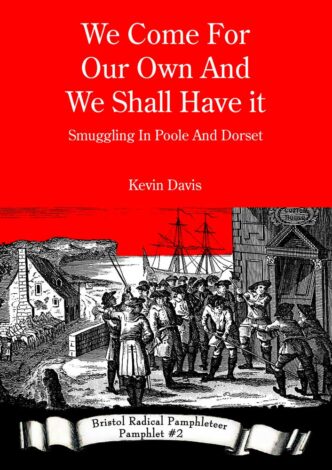
We Come For Our Own And We Shall Have It - Smuggling In Poole And Dorset

By Kevin Davis

A look at the history of smuggling in Dorset and the government responses to it. This pamphlet examines to whether smugglers should be considered folk heroes and to what extent smuggling was a community enterprise.

Buy this pamphlet from Tangent Books or Active Distribution. The pamphlet is also available from The Seven Stars Pub.

We Come For Our Own Front Cover

Front Cover

We Come For Our Own Back Cover

Back Cover

Line

Bristol Radical Pamphleteer #3 & 3.5

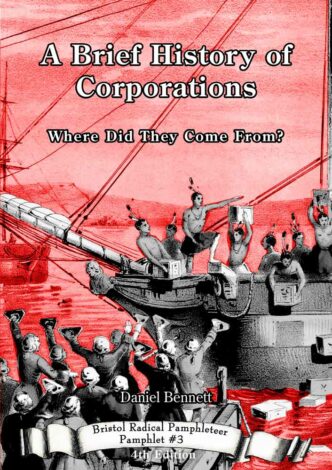
A Brief History Of Corporations - Where Did They Come From?

By Dan Bennett & Andy Singer

Where did corporations come from and how did they get the same legal rights as individuals? This pamphlet attempts to answer these questions in a manner that will not cause the reader too much distress. But if you want more jokes the pamphlet also includes a three page comic by Andy Singer which addresses the same questions.

"An entertaining and educational read" - Noam Chomsky (As relayed to Dan by Ward Morehouse, honest)

Buy this pamphlet is available from Tangent Books or Active Distribution.

We Come For Our Own Front Cover

Front Cover

We Come For Our Own Back Cover

Back Cover

Line

Bristol Radical Pamphleteer #4

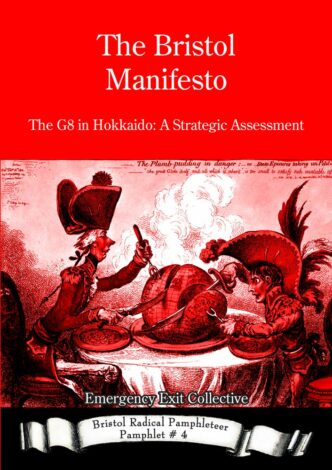
The Bristol Manifesto - The 2008 G8 In Hokkaido: Strategic Assessment

By The Emergency Exit Collective

When Bristol Radical History Group staged a series of events called Down With The Fences! The Struggle For The Global Commons in May 2008, a group leading academics found themselves together in an Eastville living room. They talked about what they would like to say to the leaders of the G8 countries who were soon to meet in Hokkaido, Japan. The result of their discussions, published under the name of the ‘Emergency Exit Collective’, is The Bristol Manifesto.

Buy this pamphlet is available from Tangent Books or Active Distribution.

John Locke

Front Cover

The Bristol Manifesto

Back Cover

Line

Bristol Radical Pamphleteer #5

John Locke - The Philosopher of Primitive Accumulation

By George Caffentzis

John Locke is the most famous philosopher born and raised in the vicinity of Bristol. He born in Wrington, Somerset about 12 miles from Bristol on August 29, 1632 and he was brought up in the market town of Pensford, about seven miles south of Bristol.

Locke is also not only the main intellectual founder of liberalism, but also of neoliberalism, the “ruling idea” of the ruling class of today.

George Caffentzis is associate professor in the Department of Philosophy, University of Southern Maine, USA.

Buy this pamphlet is available from Tangent Books or Active Distribution.

The Bristol Manifesto

Front Cover

John Lock

Back Cover

Line

Bristol Radical Pamphleteer #6 - 2nd Edition

The Life And Times Of Warren James - Free Miner Of The Forest Of Dean

By Ian Wright

Warren James was a man who was caught up in the social unrest that swept through the Forest of Dean in 1831, and who emerged as spokesman for the Foresters in their struggle to protect their ancient rights and way of life. The Forest Riots of 1831 were about insecurity, fear, poverty and starvation as a result of enclosures, enforced wage labour or unemployment. The Foresters fought to resist the twin onslaught from the Crown, who owned the Forest, and from businessmen who sought industrial profits from it.

The 2nd edition is revised, slightly extended and has a new front cover by Clifford Harper.

Buy this pamphlet is available from Tangent Books or Active Distribution.

The Life And Times Of Warren James

Front Cover

The Life And Times Of Warren James

Back Cover

Line

Bristol Radical Pamphleteer #7

'Race War' - Black American GIs in Bristol and Gloucestershire During World War II

By Neil A. Wynn

America's entry into World War II immediately served to highlight the issue of race relations and the contradictions between America's declared position as a defender of "freedom" and "democracy," and what was actually practiced. Prior to the D-Day landings of June 1944, there were just under 1.6 million American forces personnel located in various parts of the U.K, with the largest numbers gathered in the southwest. The pubs in Bristol were segregated with some serving whites only, others, generally poorer ones, blacks only. As early as 1942 arrangements had been made to seat the races separately in cinemas in Yeovil and Chard. Even fish and chip shops operated on racial lines or used black Wednesdays and white Thursdays.

Find out about the unrest that happened in Gloucestershire and Bristol when a segregated army made camp there.

Neil Wynn is Professor of 20th Century American History at the University of Gloucestershire.

Buy this pamphlet is available from Tangent Books or Active Distribution.

Race War

Front Cover

Race War

Back Cover

Line

Bristol Radical Pamphleteer #8

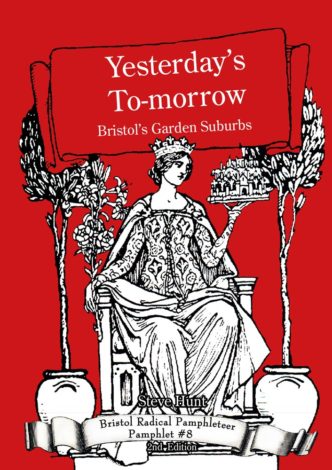
Yesterday's To-morrow - Bristol's Garden Suburbs

By Stephen E. Hunt

In 1909, the Bristol Garden Suburb Limited was set up to implement the ideas Ebenezer Howard popularised in To-morrow: A Peaceful Path to Rea Reform, first published in 1898. Garden-City principles inspired promising developments at Shirehampton, Sea Mills and Keynsham chocolate factory, but were diluted in the construction of Bristol's interwar housing estates at Knowle West and Bedminster, Hillfields, Southmead, Horfield, Speedwell and St Annes. Today it's timely to revisit Howard's ideas in the light of several topics of green chatter – transition towns, peak oil and Gordon Brown's intention to promote the construction of eco-towns.

This pamphlet is available from The Architecture Centre, Narrow Quay Bristol, BS1 4QA, 0117 922 1540

Read an articel about this pamphlet in the Bristol Evening Post.

Buy this pamphlet is available from Tangent Books or Active Distribution.

Yesterday's To-morrow Front Cover

Front Cover

Yesterday's To-morrow Back Cover

Back Cover

Line

Bristol Radical Pamphleteer #9

Nicotiana Brittanica - The Cotswolds’ Illicit Tobacco Cultivation In The 17th Century

By By Will Simpson & Jim McNeill

Four centuries ago a group of farmers from the West Of England decided to see if they could make a living for themselves by growing tobacco. This put them at odds with the English state and its imperial ambition to build a merchantile economy driven by indentured and slave labour. This is their story of resistance. Fair-trade home-grown tobacco? Put that in yer pipe and smoke it!

Buy this pamphlet is available from Tangent Books or Active Distribution.

Nicotiana Britanica Front Cover

Front Cover

Nicotiana Britanica Back Cover

Back Cover

Line

Bristol Radical Pamphleteer #10

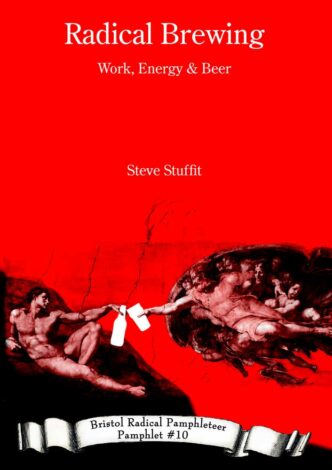
Radical Brewing - Work, Energy, Commoning & Beer

By Steve Stuffit

This is a journey from pre-enclosure herbal brews made by ale-wives to the domination of hops and large breweries. But don't despair, this is a return trip thanks to the rediscovery of commoning and a recipe for nettle and juniper ale.

Buy this pamphlet is available from Tangent Books or Active Distribution.

Radical Brewing Front Cover

Front Cover

Radical Brewing Front Cover

Back Cover

Line

Bristol Radical Pamphleteer #11

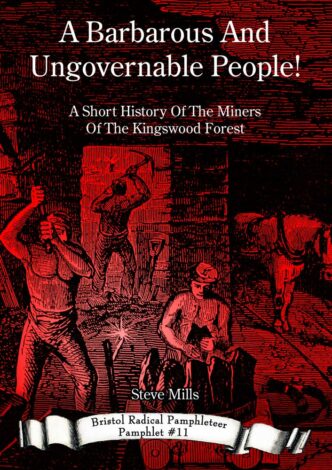
A Barbarous And Ungovernable People - A Short History Of The Miners Of The Kingswood Forest

By Steve Mills

"A barbarous and ungovernable people" is a bit of a strong condemnation of a community. Especially considering that at the time the community in question was situated on the outskirts of a vibrant city in Britain. The people of Kingswood Forest supplied the south west of England and the industries of Bristol with coal, and it is fair to say that without the Kingswood Forest coal Bristol would not be the city it is today. However, the relationship between the two communities was strained to say the least. This pamphlet tells the story of the misunderstanding and mistrust which, from time to time, blew up into full scale conflagration.

Buy this pamphlet is available from Tangent Books or Active Distribution.

Front Cover

Kingswood Back Cover

Back Cover

Line

Bristol Radical Pamphleteer #12

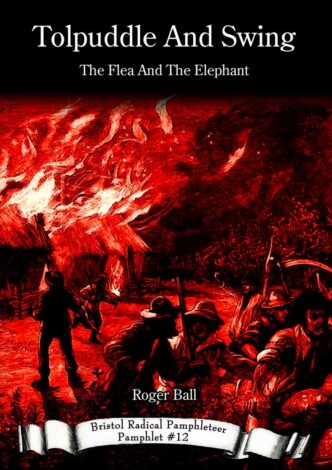
Tolpuddle And Swing - The Flea And The Elephant

By Roger Ball

In 1834, six Dorset farm labourers were tried and condemned to transportation to Australia for joining an early Trade Union. Since then the 'Tolpuddle Martyrs' have become an iconic part of modern British History. Three years before the events in Tolpuddle, much of rural England was rocked with a massive uprising of farm labourers known as the 'Swing Riots'. This pamphlet analyses why 'Tolpuddle' has taken its place in the popular memory and the far more significant events of 'Swing' have been distorted and forgotten.

Buy this pamphlet is available from Tangent Books or Active Distribution.

Tolpuddle And Swing Back Cover

Front Cover

Tolpuddle And Swing Back Cover

Back Cover

Line

Bristol Radical Pamphleteer #13

Bristol's White Slave Trade - Indentured and Enforced Labour In The 17th Century

By Andrea Button

Bristol’s role as a supplier of labour to the American and West Indian colonies in the eighteenth century is associated with the African Slave Trade however, this trade was not officially open to the Bristol merchants until 1698. The indentured white servant system, operated in Bristol during the seventeenth century, were used by merchants to meet demand for labour in Britain’s new colonies until the Bristol merchants were legally able to compete in the lucrative transatlantic trade. This pamphlet reveals the extent of this ‘white slavery’ and its links to Bristol.

Buy this pamphlet is available from Tangent Books or Active Distribution.

Bristol's White Slave Trade - Front Cover

Front Cover

Bristol's White Slave Trade Back Cover

Back Cover

Line

Bristol Radical Pamphleteer #14

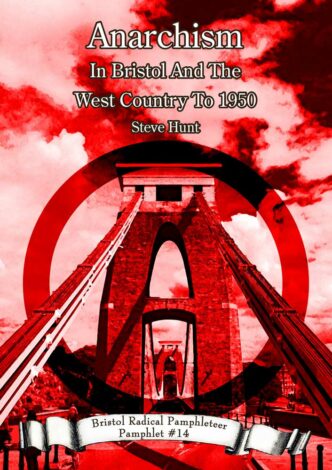
Anarchism in Bristol and the West Country to 1950

By Steve Hunt

Firstly some firsts. Bristol M.P. Edmund Burke was the author of what was perhaps the first anarchist tract; Westcountryman Henry ‘Orator’ Hunt first pioneered the use of the mass platform for ‘rabblerousing’ against the establishment; Bristol was the home of the first avowedly atheistic journal. This is a survey of home-grown anarchism, with its roots in a tradition of West Country radicalism.

By the end of the Nineteenth Century explicitly anarchist sensibilities had already emerged as currents from within the labour movement. Alongside such well known anarchist and libertarian socialist celebrities as Peter Kropotkin, William Morris and Edward Carpenter, many other colourful and inspiring characters who believed in ‘The Cause’ were to be found here, in the public halls, on the strike committees and in the countryside of our fine Wessex region.

In the Twentieth Century, the wave of syndicalist new unionism affected the West Country before the First World War, while many locals supported the Spanish Revolution during the 1930s, did as Emma Goldman who spent time in Bristol and Bath (often followed by a ‘brace of detectives from Scotland Yard’).

So let’s put on our wide-brimmed flowerpot hats and black cloaks and wander down to the coffee taverns to see who is around.

Buy this pamphlet is available from Tangent Books or Active Distribution.

Anarchism in Bristol and the West Country to 1950 - Front Cover

Front Cover

Anarchism in Bristol and the West Country to 1950 - Back Cover

Back Cover

Line

Bristol Radical Pamphleteer #15

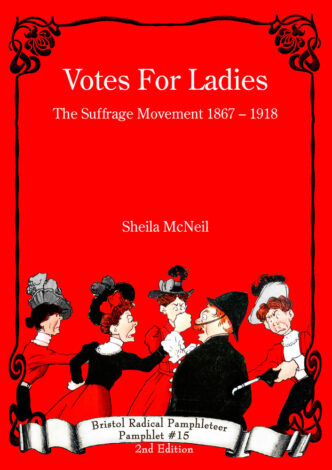
Votes For Ladies - The Suffrage Movement 1867 - 1918

By Sheila McNeil

The Suffragettes are widely seen as the pinnacle of Women’s radical action in the early Twentieth Century. However, beyond the passion and drive of such unladylike militancy, were the organisation and aims of this movement as radical as the means used to try to obtain it? Were the Suffragettes alone in the struggle for female emancipation? And how far can the granting of limited female suffrage in 1918 be attributed to the exploits of these women?

This pamphlet analyses this iconic 'women's' movement and question how far it can really be seen as part of Radical History.

Buy this pamphlet is available from Tangent Books or Active Distribution.

Votes For Ladies - Front Cover

Front Cover

Votes For Ladies - Back Cover

Back Cover

Line

Bristol Radical Pamphleteer #16

Anglo-Saxon Democracy

By Tony Dyer

Contrary to popular belief, the end of Roman rule in Britain did not see ethnic cleansing and the genocide of the native "Celtic" population by invading Anglo- Saxons.

Instead it saw the end of a period of imperialistic colonial rule and a return to a native tradition where justice and common land rights were maintained by the community for the community. As a result one of the most creative and prosperous societies in Europe was established.

This native tradition was, however, to be fatally undermined in the name of protecting the country from an external terror threat, and was finally destroyed by one of the most oppressive and exploitative societies ever seen - The Normans. This is the story of how and why it happened.

Buy this pamphlet is available from Tangent Books or Active Distribution.

Anglo-Saxon Democracy - Front Cover

Front Cover

Anglo Saxon Democracy - Back Cover

Back Cover

Line

Bristol Radical Pamphleteer #17

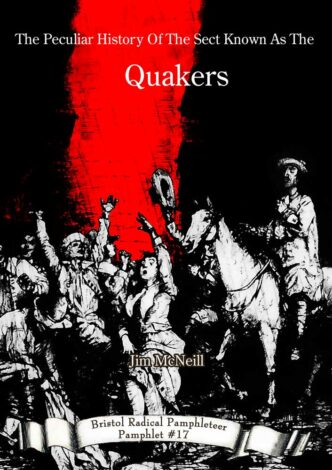
The Peculiar History Of The Sect Known As The Quakers

By Jim McNeill

Who were the Quakers? Why were they persecuted? Why did they stop being radical? How did some of Bristol’s Quakers become so rich?

From James Naylor’s blasphemous ride down Corn Street to William Penn being given Pennsylvania and Abraham Darby laying the foundations of the Industrial Revolution. This is the first of two pamphlets by Jim McNeill exploring the history of the Quakers in Bristol.

Buy this pamphlet is available from Tangent Books or Active Distribution.

Quakers - Front Cover

Front Cover

Quakers - Back Cover

Back Cover

Line

Bristol Radical Pamphleteer #18

The Life & Family of William Penn - 260 Years of Bloody Colonial History

By Jim McNeill

This booklet is a short analysis of the role of the Penn family and other early Quakers in the Transatlantic Slave Trade and European expansionism in the North Americas.

As far as I am aware this story, the links between the different generations of the Penn family, has never before been told. It is pertinent to ask, “Why is this so?” The Penn family was at the heart of the English Revolution in the 17th Century and of every important event of British colonial expansionism from the colonisation of Ireland, Jamaica and the East Coast of North America. Yet, especially in Bristol, where the family had such strong connections, citizens are unaware of either the Penn family’s role in shaping the way we live or that their actions created social and class tensions that are still being played out today.

In fact, the Penn family, when it is referred to at all, is portrayed in Bristol as being either brave seafarers (Admiral Sir William Penn is celebrated in Bristol’s St Mary Redcliffe Church) or with kindly, if not saintly, reverence (such as the statue of William Penn in Millennium Square and his introspective Quaker writings that can be found in most, if not all, of the city’s Quaker Meeting Rooms).

What is never mentioned in public is the full story of the Penns, including that:

Buy this pamphlet is available from Tangent Books or Active Distribution.

Penn Family - Front Cover

Front Cover

Quakers - Back Cover

Back Cover

Line

Bristol Radical Pamphleteer #19

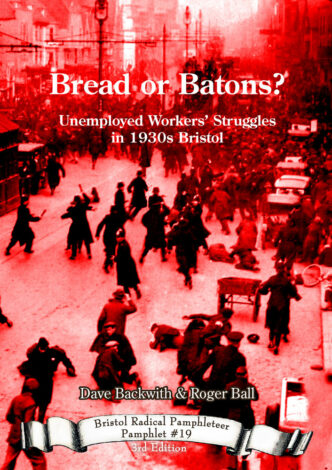
Bread Or Batons? Unemployed Workers Struggles’ in 1930s Bristol

By Dave Backwith & Roger Ball

The banking crisis of 2008 and the following deep recession experienced by the world economy have led to mass unemployment and poverty in the U.K. Massive public sector cuts along with huge financial bonuses for the wealthy have exacerbated the systemic divisions between ‘rich and poor’ which lie at the heart of the neo-liberal economy. For many commentators the spectre of economic depression has raised its ugly head once again. It thus seems apt to look back at Bristol in the period of the last ‘great depression’ in the 1930s to see what was occurring. There are numerous parallels with today in this text, from cuts in poor relief and public services, a collaborationist and emasculated Labour opposition, to the brutal policing of demonstrations and a corrupt and reactionary media. In all this misery, however, the commitment and actions of unemployed Bristolians shine out giving us both hope as well as lessons learned.

This pamphlet is divided into four sections. The first and second look respectively at the state of political economy from a national and Bristolian perspective in the 1930s. The third section considers what happened on the streets of Bristol principally in 1932. We look in detail at the demonstrations, the reaction of the police and protestors and the organisation of the principal players including crucially the National Unemployed Workers Movement (NUWM), the main organisation opposing unemployment and the ‘cuts’. The last section consists of an analysis of the reaction of the state to the protests of the unemployed, the changing police tactics they employed to ‘deal with them’ and the gains made by the NUWM. The text is heavily footnoted, primarily to aid those who would like to research the events further but also to scotch attempts by establishment historians to denigrate ‘our history’ as supposedly ‘unprofessional’. As they are mostly references to sources they can be ignored by the reader who demands a ‘racier’ narrative.

Buy this pamphlet is available from Tangent Books or Active Distribution.

BreadOr Batons? - Front Cover

Front Cover

Bread Or Batons? - Back Cover

Back Cover

Line

Bristol Radical Pamphleteer #20

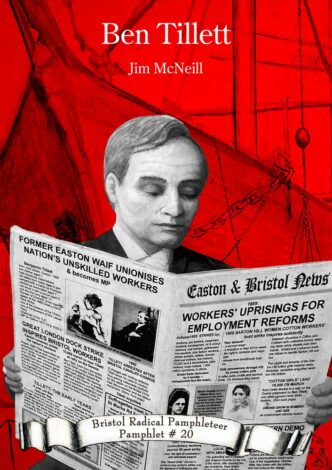
Ben Tillett

By Jim McNeill

This booklet concerns the life of a working-class Bristolian who, though tireless and outspoken in his early days in addressing the inequalities of society, nevertheless moved more and more towards a position of contempt for both the members of his own trade unions and the working people who voted for him as an MP.

A study of Ben Tillett’s life contains, I think, lessons that will enable readers to deepen their understanding of the historical roots of ‘New Labour’ with its duplicity and jingoistic, ‘little Englander’ mentality as well as the political positions of Trade Union leaders as they seek to limit public debate, analysis of the current recession and alternative political strategies with the very class of people they supposedly represent.

The co-ordinated actions by Victorian and Edwardian employers to combat the rise of ‘new unionism’ epitomised by Ben Tillett involved all branches of the State (police, army, civil servants) as well as politicians at local and national level. Tillett’s life story shows how the State also relies on leaders of labour to head off independent working class movements that threaten private ownership. The miners’ strike and the Wapping dispute of the 1980’s are more recent examples of such tactics and all add to the historical proof of what really lies behind the smiling mask of ‘Caring Capitalism’.

Finally, it is curious how continual Bristol Authorities remain silent of many of its significant historical figures – figures who shaped the way we live and think today. Certainly the people of Bristol should be made more aware of the remarkable achievements and political failures of their native son, Ben Tillett. Perhaps this booklet will stimulate others to produce a more in-depth publication which will take the political analysis of Tillett’s life a little further and a little deeper.

Buy this pamphlet is available from Tangent Books or Active Distribution.

Ben Tillett - Front Cover

Front Cover

Bread Or Batons? - Back Cover

Back Cover

Line
BRHG Letters

Contact BRHG | News RSS | facebook group | Search