The Slave Decks

A retrospective account of life onboard the Hannibal slave ship
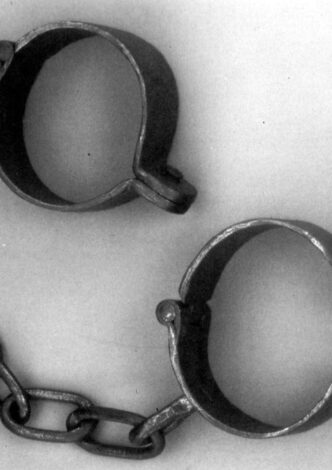
Warning – Due to the nature of the topic this article is not suitable for children The stench of the hold…was so intolerably loathsome that it was dangerous to remain there for any time…but now that the whole ship’s cargo were confined together, it became absolutely pestilential.[1] Let me begin by saying that there was nothing unique about the utterly appalling conditions that existed on the Hannibal slave ship: All merchant slave ships were floating prisons of cruelty and depravity. For the […]
Slaves – the secret of Tyntesfield House

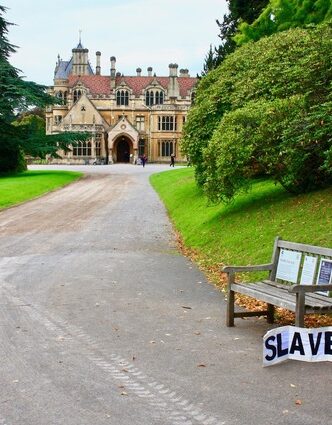
This article first appeared on the BRHG Facebook page in October 2019. It is published here as a tribute to Steve Philbey who passed away in August 2022. The connection between indentured labourers in the Chinese city of Amoy (now called Xiamen) in the 1840s having the letter C burnt into their ears and a Somerset man who was for a time the richest merchant in England illuminates a story that has been overshadowed by Bristol’s involvement in the slave trade and the fortunes made by the likes of […]

Bath Workhouse Burial Ground Project

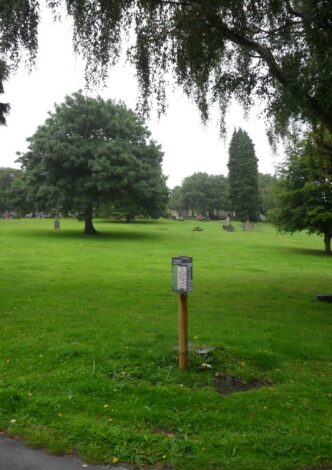
Trees will grow and a wildflower meadow bloom at Bath’s Union Workhouse Burial Ground. A place of memory and reflection is emerging thanks to the work of local residents, artists and descendants of those buried there, unmemorialised, in unmarked graves. As the official memorial to a slave trader was toppled in Bristol, people in Bath sought to memorialise those officially forgotten. Bath Workhouse burial grounds do not exist on any modern map, there is no signage or plaque. Following a long […]

Some insights into the lives of the crew onboard the slave ship Hannibal

An often overlooked but essential element of a slave ship, such as the Hannibal, was the requirement for a large crew in comparison to the number of sailors usually required to man ordinary merchant shipping. Sailors who were to work on slavers would be recruited by any means possible. For example, some men were offered the option by a magistrate or judge of going to prison, transportation, or work as crew on a slave ship. John Newton, author of The Journal of a Slave Trader, described his crew […]

From Lewis Hamilton to Jemima (age 12)

Comments on the fall of Colston

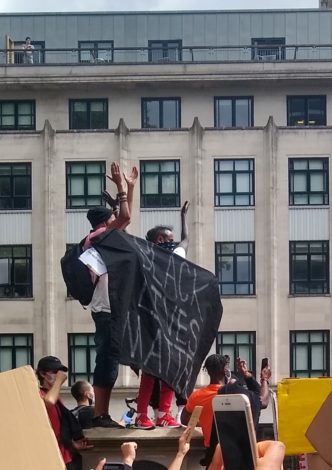
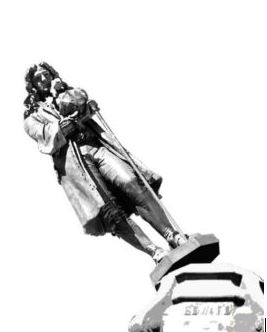
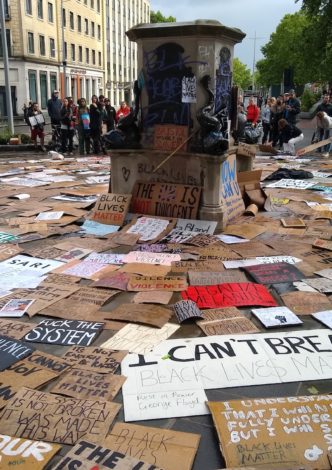
TEAR THEM ALL DOWN. Everywhere. Lewis Hamilton (seven time F1 World Drivers Champion) Black Lives Matter X heart X heart. Jemima (age 12) This is the third in a series of articles written in the wake of the fall of Edward Colston's statue in June 2020. The previous articles consisted of two fully referenced timelines, the first covering more than a century dissent and protest concerning Colston's leading role in transatlantic slavery and the second considering the local, national and […]

The fall of Colston – a timeline of impact in Bristol, Britain and the World

From Bristol to Bridgetown

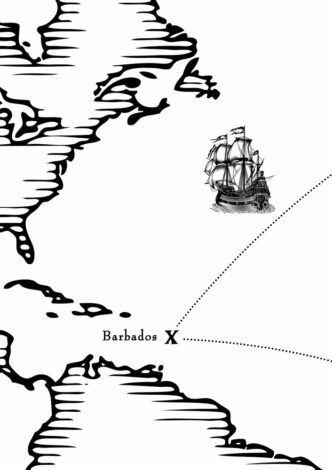
  All over the world I’ve seen grandchildren of slave masters tearing down slave masters statues – over in England they put it in the river. Reverend Al Sharpton speaking at the funeral of George Floyd in Houston, Texas, 10 June 2020. It's been quite a fortnight. Last week we had the declaration of the new Republic of Barbados (we salute you!) exactly 55 years after gaining independence from Britain, and this week, news that the jewel in the crown of the Society of Merchant Venturers, […]

New pauper burial research at Greenbank cemetery

Introduction From 2014-2019 Eastville Workhouse Memorial Group (EWMG) studied Rosemary Green, a piece of land consecrated and used as a pauper burial ground soon after the new workhouse was built at 100 Fishponds Road in 1847. Eastville workhouse was the primary institution of the Clifton Poor Law Union which covered 12 parishes north of the River Avon outside the old city walls. In March 1877 the Clifton Poor Law Union was renamed as Barton Regis. The Union remained unchanged until 1898 when […]

Edward Colston: A century of dissent and protest

Introduction During the furore about the renaming of the Colston Hall in 2017 a number of angry letter-writers to the Bristol Post claimed that the recent protests over Edward Colston were merely a ‘flash in the pan’ and a product of ‘woke’, faddist politics propagated by people from outside Bristol. This attempt to reduce the actions of groups and movements like Countering Colston and Black Lives Matter to a particular historical moment whilst the great weight of a supposed ‘tradition’, such as […]

‘Triptych’ A poem by Marvin Thompson – Slaver Captain Phillips of Brecon (1693-1694)

A Poem by Marvin Thompson

On the weekend of 7-9 June 2020 the Brecon plaque to a slave trading captain was stripped from the wall on which it was erected in 2010. Poet Marvin Thompson was inspired to write the following poem: On the Anniversary of the death of George Floyd: Dear Brecon Town Council, A mouth drying to mud, tightening lungs and eyes on the edge of tears: that was the reaction of my Black British body when, on this wind-lash of a lockdown morning, I read who you class as a role model for my Welsh, Mixed […]

The Great Post Office Strike of 1971

“Here lies the body of Postman Sid: he could not exist on fourteen quid!”

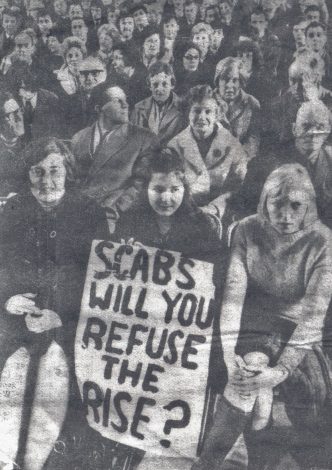
The 15th February 1971 was United Kingdom Decimalisation Day: no longer were there 12 pennies to a shilling, half-crowns, or 240 pennies to the pound. That day, 50 years ago, was also just over half-way through the greatest strike this country had seen since the General Strike of 1926: the 44-day national strike of 200,000 Post Office workers. Telegraphists, telephonists, Post Office counter clerks, cleaners, postmen (170,000 of them!) and PHGs (Postmen Higher Grade), members of the Union of […]