
Bedminster Coalmines

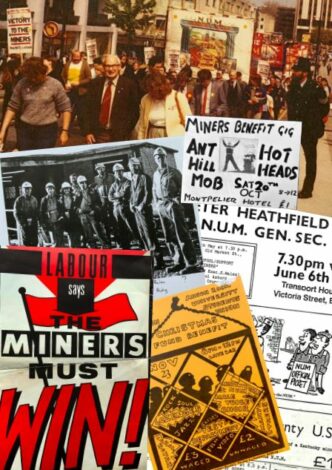
The Greater Bedminster area was once covered by coal mines stretching from East Street to Long Ashton. This walk will take you around the sites of nine of the mines, each of which have their own stories, many ending in tragedy for the mineworkers. Although there is little left above ground now, this will soon change with plans to memorialise the memories of the thousands of almost forgotten working class Bristolians who worked, and often died, in the deep pits below the surface of Bedminster, […]

Bristol’s Misérables

The soldiers and sailors of Stapleton prison

Chris Bowkett’s talk focuses on the untold history of Stapleton Prison, the home of captured soldiers and sailors during the French Revolutionary and Napoleonic wars. Using stories of the prisoners themselves, this talk reveals the surprising amount of freedom offered to Britain’s “enemies” whilst in captivity, contrasted with their biggest problem: boredom. This talk covers both the inventive and self-destructive ways “the miserables” occupied their time at His Majesty’s pleasure.

Partners in crime

Collusion between Church and State in Ireland’s notorious mother and baby homes

Mary Muldowney will give an overview of the appalling abuses that took place in many of the mother and baby homes in Ireland since the foundation of the state in 1922. The homes were supposed to provide safety and support for unwed mothers at a time when there was considerable stigma attached to having sex outside marriage. They were mainly run by religious bodies, predominantly Roman Catholic nuns, and the regimes they established had more to do with punishing the ‘sins’ of the mothers than […]

‘London Recruits’ and Bristol

In the 1960s it looked as if the opposition to the apartheid regime in South Africa had been crushed. Many of the leaders of the African National Congress has been imprisoned and BOSS, the regime’s ruthlessly efficient police force, suppressed any sign of resistance. But a group of South African exiles in Britain were determined to fight back. Ron Press was one of the 156 opponents of apartheid arrested in 1956 on the charge of high treason – they included Nelson Mandela – and he took part in a […]

Annie Townley

A force for socialism and peace

Annie Townley (1878-1966) Annie Townley: A force for socialism and peace describes a remarkable journey from working-class Lancashire textile mill worker to employment as a Bristol-based organiser in the suffrage and labour movements. In many cases using Annie’s own words, June Hannam brings to life a character dedicated to working-women’s rights and social justice. “Some of us who have been called dreamers and who believe in Socialism, wonder if it had not been better for our City Fathers to […]

We must begin with the land

How the social ecology of the 1970s counterculture helps us to think about food production

The Institute for Social Ecology (ISE) was a significant flowering of political ecology from the 1960s and 1970’s counterculture. It was co-founded in 1974 by its most prominent thinker, Murray Bookchin, and Dan Chodorkoff. Bookchin wrote extensively about food and agriculture from the early 1950s. In 1962, his first book on pesticides appeared, shortly before Rachel Carson’s more famous Silent Spring on the same topic. As an autoworker brought up in The Bronx district of New York, he was an […]

Plotlands of Shepperton

A reading by Stefan Szczelkun

Stefan Szczelkun will read from his book Plotlands of Shepperton - a unique artist’s book on a massively under-researched area of the history of housing, soon to be re-released in large format. Szczelkun's commentary on Britain's plotlands reveals the houses to be haunted by their radical history. Do they contain a key to the ‘housing problem’ that the establishment dare not countenance? Following his reading, Stefan will discuss this and more in conversation with BRHG's Paul Smith.

Hartcliffe Betrayed

The fading of a post-war dream

Paul Smith’s talk will draw on his research into the history of Hartcliffe, designed by planners in the 1940s on the garden city model, built as a housing estate in the 1950s. This tale of the steady removal of planned facilities and the reduction in the quality of homes presented huge challenges to a community of ‘pioneers’ exported to the outskirts of the city. The story of Hartcliffe was repeated across the country as estates were built on the edges of towns and cities. This story has […]

‘Working for your dole’

British labour camps, 1929–1939

After the financial crash of 1929 and during the years of the 'great depression' in the 1930s, the Ministry of Labour in Britain introduced a series of 'instructional camps' for the long-term unemployed, which were supported by successive governments. Over 150,000 men from 'distressed areas' were sent to do hard labour in these remote settlements. Using contemporary images and excerpts of oral history from the film Old Hands this talk explains the nature of these camps, how they functioned and […]

Wapping – the workers’ story

70 mins – 2020 (Dir. Christopher Reeves) Introduced and Q&A with Ann Field (SOGAT official during the strike). A film about the momentous year-long industrial dispute which began in 1986 when Rupert Murdoch plotted to move production of his papers overnight from central London’s Fleet Street to a secretly equipped and heavily guarded plant at Wapping, a docklands district in east London. 5,500 men and women lost their jobs and centuries of tradition in one of London’s last manufacturing […]