

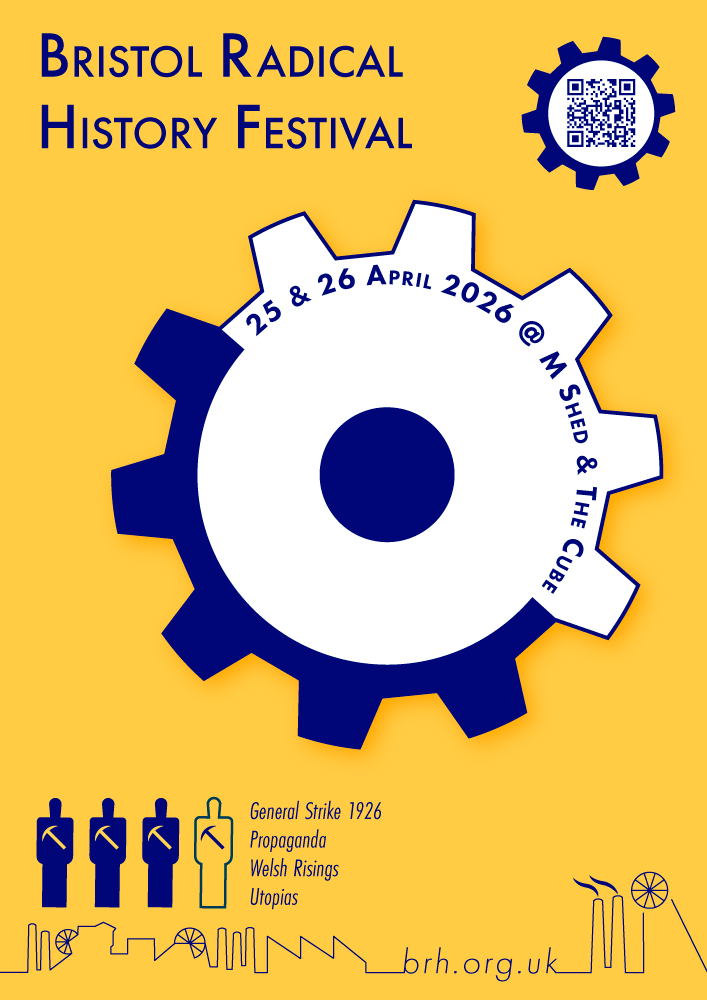
The Bristol Radical History Festival returns this Spring for its eighth edition, with history talks, panel discussions, films, history walks, performance and exhibitions. There will also be space devoted to stalls, where you can stock up on history pamphlets, books and more, from over 30 publishers and distributors.
The main part of the festival is held over two days at two main venues: Saturday 25th April at Bristol’s social history museum on the city’s historic harbourside, M Shed; and, Sunday 26th April at the volunteer-run arts centre and cinema the Cube Microplex.
This year’s event has four main themes: Propaganda, Utopias, Welsh Risings and the 1926 General Strike.
And most importantly, the festival is (almost) entirely free. And, whether you are an academic, local historian or curious first timer, all are welcome.
Incidentally, this year also marks twenty years of the Bristol Radical History Group. Our first event was the inaugural Bristol Radical History Week in October 2006. Since then the group has become a permanent fixture on Bristol’s cultural landscape, and along the way has hopefully shifted some perceptions about the city’s history (and the odd statue).
Jump to the full programme of events.
Gafael Tir: The Cube – Friday 17 April 8.00pm – SOLD OUT
As a preliminary to the festival, there will be a performance of Gafael Tir on Friday 17 April at the Cube, a new show that shines a spotlight on the Welsh history of land rights and protest in folk song and story.
There is another opportunity to see the show at the Newport Rising Hub on Thursday 16 April. Details here.
Film: Becoming Benjamin Lay – Central Quaker Meeting House – Thursday 23 April 6.00pm-8.00pm (Free)
Abolitionist, Quaker, Sailor, Dwarf and Revolutionary; Becoming Benjamin Lay is a documentary film covering the life of this fascinating figure.
M Shed: Saturday 25 April 10.30am–4.30pm Free
Theme 1: General Strike 1926
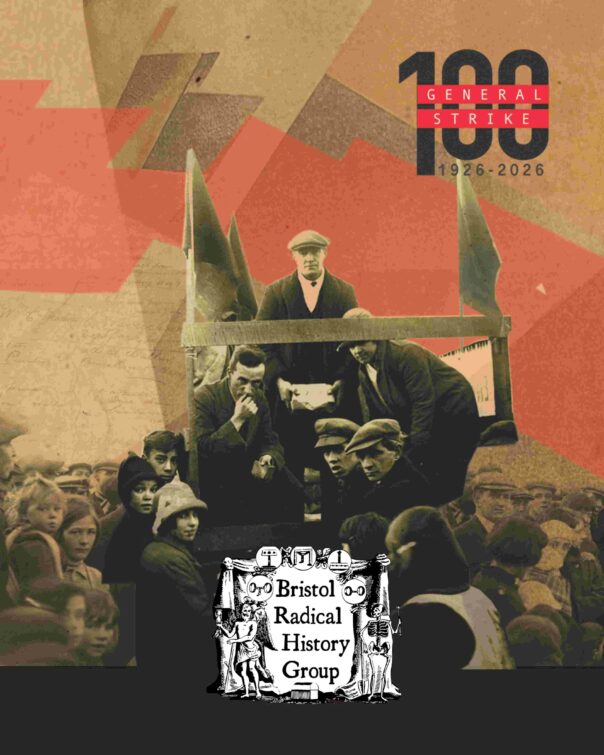 The 1926 General Strike, and the months – long miners’ lockout which overlapped with it, was arguably the greatest ever mass mobilisation of the British trade union movement. It lasted nine days and ended in defeat, although there are many elements of the event which can still be celebrated. Workers in Bristol, including dockworkers, railwaymen, road transport, building, printing, electricity generation and engineering, all became involved at some point in the nine days, showing solidarity with the miners. In the wider region there were coalfields in South Gloucestershire, Somerset and the Forest of Dean, docks at Gloucester and railway stations and depots everywhere.
At the Radical History Festival BRHG will launch a series of eight pamphlets on different aspects of the General Strike in our region. These are a product of our General Strike project which has been researching the strike over the last year.
Theme 2: Propaganda
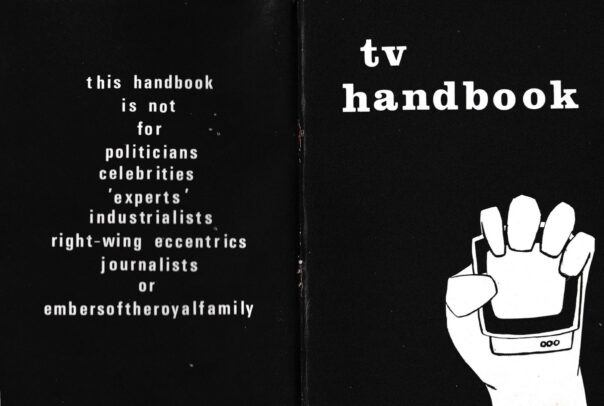
The way we are taught history in school and fed current affairs through the mainstream media leaves a lot to be desired. Often it is left to the forever curious to uncover what has been left hidden, whether deliberately or not. These gaps in our knowledge influence our views of the world. By revealing much that has gone unsaid and unheard our speakers will seek to dispel false historical narratives and shine some light on the darker side of our past.
Propaganda is not a modern phenomenon, as Steve Poole will demonstrate how loyalist imagery helped spur violent opposition in Britain to the French Revolution. Then there are the secrets hidden in or erased from official archives as Riley Linebaugh will examine in her talk about the British state attempts to destroy evidence of its colonial war crimes. Meanwhile at the Fighting Erasure Project at the American University of Beirut archivist Ghada Dimashk works to preserve the history and culture of Palestine to counter efforts to erase it. Lucy Goodison and Colin Thomas, BBC employees in the 1970s, uncover a hidden history of dissent and refusal in reaction to the representation of the conflict in Ireland and government interference in the corporation. Finally, senior news gatherers Dorothy Byrne (ex-Channel 4) and Nicholas Jones (ex-BBC) discuss the constraints under which journalists in the UK media are expected to operate.
Theme 3: Welsh Risings
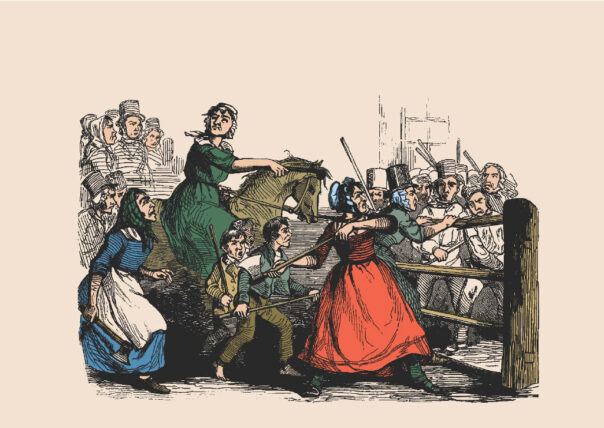
The history of Wales in the nineteenth century is framed by the huge social changes associated with the industrial revolution and the displacement of hundreds of thousands of proletarians to work in mines, iron works and transportation. It is also a history marked by working class uprisings. These were driven by direct action over day-to-day issues such as freedom of movement, wages, prices, working conditions, and influenced by Chartist ideas of obtaining working class power.
From the daughters of Rebecca in west Wales, via the iron workers in Merthyr to the Chartist risings in Llanidloes and Newport. An array of Welsh historians including Rhian E. Jones, Ray Stroud, Nick Venti, Nia Griffiths and Viv Pugh will illuminate this fascinating history of rebellion. Our own Colin Thomas will look at attempts to turn the complexities of Welsh history into accessible television, including the making of The Dragon with Two Tongues, recently described by Michael Sheen as “one of the greatest history programmes ever produced on these shores.” And we are honoured to announce our chairperson is the eminent historian Dr Elin Jones, who has given so much for the education of children in Wales.
The Cube Microplex: Sunday 26 April 1.00pm–9.00pm
Theme 4: Utopias (and Dystopias) 1.00-6.00pm (Free)
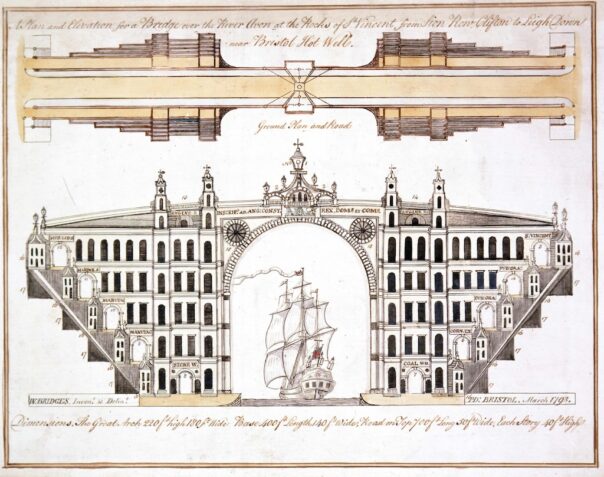
Utopian thinking is oft derided as wishful thinking, whimsical, even useless. We live in an age of dystopian visions: AI, robot overlords, devastating climate change, corruption and inequality creating a split society of the ‘haves’ and the ‘have nots’. But can utopian thinking propel us into a bountiful future? Join us at The Cube Cinema on a magical mystery tour of utopian thinking from the Medieval period, through the 18th, 19th, and 20th Centuries… and even beyond to 2087 Avonmouth!
Is utopian creative expression a tool of radical hope? Can intentional communities be considered examples of utopian experiments? Is there a way to resolve conflicts in opposing visions of utopia? What is the relationship between utopianism and dystopianism, and how will the demise of capitalism be influenced by these different ways of thinking? What does the future look like for Bristol, specifically? And importantly, how do we ground our utopianism in a practicable theory of transition?
Our excellent line up of speakers will consider these questions and more. Kirsten Harris will set the scene with a brief history of utopian thought, while Nate Taylor will investigate utopian ideas that have blossomed here in Bristol. Chris Coates will take us through a journey of experiments in utopian housing and community living and Tim Kindberg and Keir Milburn will conclude the afternoon with imaginative and speculative visions of the dystopian and utopian futures.
Film and Q&A with director: Ireland: The Silent Voices 7.00pm (£7/£5)
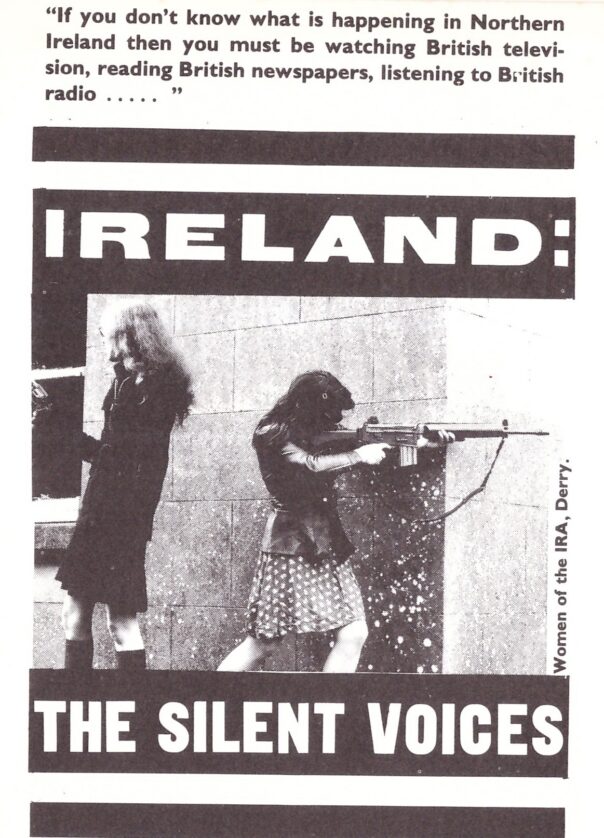
This ground-breaking documentary, originally made in 1983 for Channel 4 at the height of the war in Ireland, provided a critical counter-narrative to the pro-British propaganda spouted by most of the mainstream media in this country. Rarely seen, Ireland: The Silent Voices (80 mins), focuses on the stories and perspectives of ordinary people actively or passively involved in the conflict. In three parts, the film analyses the representation of the conflict on TV in Britain and in Europe.
We are very pleased to have the director of Ireland: The Silent Voices, Professor Rod Stoneman, from the University of Galway, to discuss his documentary. Book tickets here.
Walks
Two excellent walks this year; on Saturday, leaving from M Shed, is Copper, Coal and Colonizers a study of the mercantile connections between Wales and Bristol. And on Sunday, leaving from the old Hydra Bookshop opposite Kingsley Hall on Old Market Street, Patriots, volunteers and scabs mapping the flashpoints from the 1926 General Strike in Bristol.
Exhibitions – M Shed
We have a fascinating series of pop-up exhibitions from historians, artists and photographers in Bristol, Wales and Sweden. This year we focus on the 1980s. We have the visionary symbolism of ecofeminist artists, via the street art of inner city Bristol to images of communities in Barton Hill, Lockleaze and St Werburghs and reflections from those who were schoolgirls at the time. We also have a thirty year study of the creation of false narratives in the British media to set political agendas and Striking Women considering the strikes at Grunwick (1976-1978) and Gate Gourmet (2005) led by women of South Asian descent.
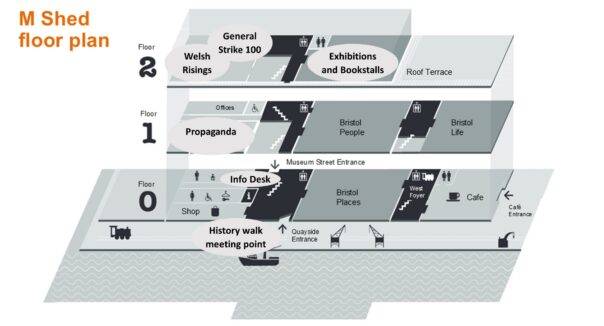
All the exhibitions are in the Waterside Suite (or on the foyer) on Level 2 of M Shed. There will be a 15 min session (at the times shown below) from the curator of each exhibition if you would like to know more about the exhibition.
M Shed – Schematic Map
Full programme
Friday 17th April
Cube
(Drag left/right)
Thursday 23rd April
Central Quaker Meeting House - Film
(Drag left/right)
| Time | Title | With | Location |
|---|---|---|---|
| Abolitionist, Quaker, Sailor, Dwarf and Revolutionary—Becoming Benjamin Lay | Main Hall |
Saturday 25th April
M Shed - Talks
(Drag left/right)
M Shed - Performance
(Drag left/right)
| Time | Title | With | Location |
|---|---|---|---|
| Red Notes Choir | Red Notes Choir | Ground Floor - Foyer |
M Shed - Walks
(Drag left/right)
| Time | Title | With | Location |
|---|---|---|---|
| Copper, Coal and Colonizers: The Welsh in the West Country and their impact on Bristol’s past | Mark Steeds | Outside front of M Shed |
M Shed - Exhibitions
(Drag left/right)
| Time | Title | With | Location |
|---|---|---|---|
| Documenting Bristol communities in the 1980s | Carrie Hitchcock | Level 2 - Waterside Suite | |
| False Narratives: When dubious images set the political agenda | Mike Jempson | Level 2 - Waterside Suite | |
| Striking Women: from Grunwick to Gate Gourmet | Amy Rushton | Level 2 - Waterside Suite | |
| Aspirations of Women: Reflections from those who were schoolgirls in the South West in the early 1980s | Wendy Hurley | Level 2 - Waterside Suite | |
| A brief history of Bristol street art and graffiti | Richard Jones | Level 2 - Waterside Suite | |
| Woman Magic 2026: Ecofeminist posters from women artists weaving between Bristol, Wales & Sweden (1968-1983) | Sue Fahy | Level 2 - Waterside Suite |
Sunday 26th April
Walk
(Drag left/right)
| Time | Title | Theme | With | Location |
|---|---|---|---|---|
| Patriots, volunteers and scabs: The 1926 General Strike in Bristol | General Strike 1926 | Chris Bowkett | Kingsley Hall, Old Market |
Cube - Talks
(Drag left/right)
Cube - Films
(Drag left/right)
| Time | Title | Theme | With |
|---|---|---|---|
| Ireland: The Silent Voices | Propaganda | Rod Stoneman |


