The Renaissance in the Upside-Down “Archives” World
The war on Gaza has unfolded in real time across social media, where civilians have become primary producers of historical record. Yet these platforms operate through opaque systems of moderation, algorithmic filtering, and AI governance that shape what survives and what disappears.   This talk examines what happens when the traditional logic of the archive is inverted—when evidence is generated by the public but controlled by private digital infrastructures. In this upside-down "archives" […]

Curating the Colonial Past

Decolonisation and struggles over colonial archives

In the early 1960s, British colonial administrations in East Africa organized the systematic destruction and removal of documents from colonies approaching independence. This exercise was later repeated resulting in the deposit of roughly 20,000 files from over 40 dependencies in secret storage in and around London, where they remained until a 2011 court case brought against the UK Foreign and Commonwealth Office by survivors of the Kenyan Emergency. This talk considers struggles to conceal and […]

The real story of the Countering Colston campaign

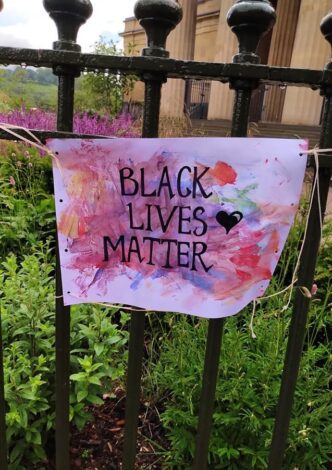
On 7th June 2020, hundreds of Black Lives Matter demonstrators pulled down the 125-year-old statue of slave trader Edward Colston, who had been put in a place of prominence in Bristol City Centre; sending shockwaves around the world. Commentators at the time thought that the act had happened in a vacuum, but the truth was that many knew that the statue was inappropriate, and that the authorities had failed them for the preceding century. The first to uncover the slavers true story was the […]

What can we learn about mental health care from Bristol’s psychiatric hospital?

  In 1861, Bristol’s Lunatic Asylum opened its doors and 164 pauper patients transferred from the workhouse. What treatment did this new state-of-the-art hospital provide, and how did it evolve over the next 130 years until closing in 1994? Stella Mann of the Glenside Hospital Museum, housed in the old asylum chapel, will talk about the evolution of Bristol’s mental health provision from the Victorian age to the present day. History can be discovered through many different routes. Every […]

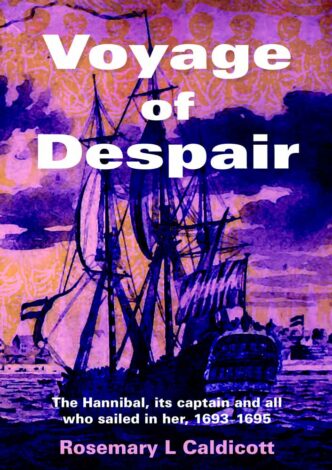
Voyage of Despair

The Hannibal, its captain and all who sailed in her, 1693–1695

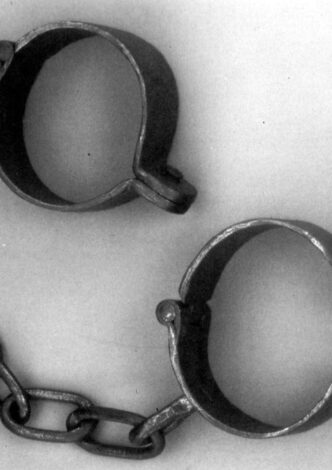
The brutality of the slave trade. In 1693, Captain Thomas Phillips embarked on a voyage from London to Guinea, where he purchased enslaved Africans on behalf of the Royal African Company. The subsequent journey across the Atlantic witnessed a tragic toll, with hundreds of the enslaved captives, and many of the crew, losing their lives before the ship reached the shores of Barbados. Three centuries later, in 2010, Brecon Town Council made a startling and controversial decision—to honour Captain […]

The role of Museums in constructing our understanding of the Trans-Atlantic Slave Trade

As I worked on gathering pertinent words that will appear in the index of my forthcoming book: The Journal of Captain Thomas Phillips of Brecon, the Slave Ship Hannibal, and all who Sailed on Her (1693-1695) the key word ‘museum’ appears on my list. Why had a word associated with exhibition interjected itself into a narrative of events that had occurred nearly 330 years ago? To answer this question, I refer to the plaque commissioned by Brecon Town Council in 2010 to honour the life of the slave […]

The role of Museums in constructing our understanding of the Trans-Atlantic Slave Trade

As I worked on gathering pertinent words that will appear in the index of my forthcoming book: The Journal of Captain Thomas Phillips of Brecon, the Slave Ship Hannibal, and all who Sailed on Her (1693-1695) the key word ‘museum’ appears on my list. Why had a word associated with exhibition interjected itself into a narrative of events that had occurred nearly 330 years ago? To answer this question, I refer to the plaque commissioned by Brecon Town Council in 2010 to honour the life of the slave […]